_edited.png)
The Role of Pyrrhotite and Pyrite In Concrete Foundation Failures On The East Coast And Why Michigan Homes Are Not An Immediate Risk

Concrete is one the most widely used construction materials for residential and commercial foundations. Its structural integrity is dependent on the quality of its components - cement, water, and aggregates. Within the last decade, (and not limited to) certain regions of the northeastern U.S. and Canada have been experiencing cracking and crumbling foundations, with a current estimated 40,000 homes compromised - and that number is expected to rise.

Pyrrhotite and Pyrite are naturally occurring iron sulfide minerals that have been linked to the widespread concrete foundation failures. In short, when pyrrhotite or pyrite are exposed to air and water, through chemical reactions the iron sulfides break down and form a sulfate. The newly formed sulfate has a larger mass and as it expands, the concrete form surrounding it swells and cracks.
There are two main ways the foundations are being damaged:
Pyrrhotite and Pyrite are found in the rock below a building or home that can swell and apply pressure on foundations. Over time the cracks will allow moisture to seep into the foundation and repeat the process, causing water damage on top of widening structural gaps.
Pyrrhotite and Pyrite is present in the aggregate that is used to make the concrete mixture itself. The same chemical process is at play.
The current widespread problem was traced to a quarry in Willington, CT, where a company (J.J. Mottes) used aggregate from a pyrrhotite-bearing rock formation. Foundations poured between the early 1980s and 2015 have shown signs of premature deterioration, often within 10–15 years.
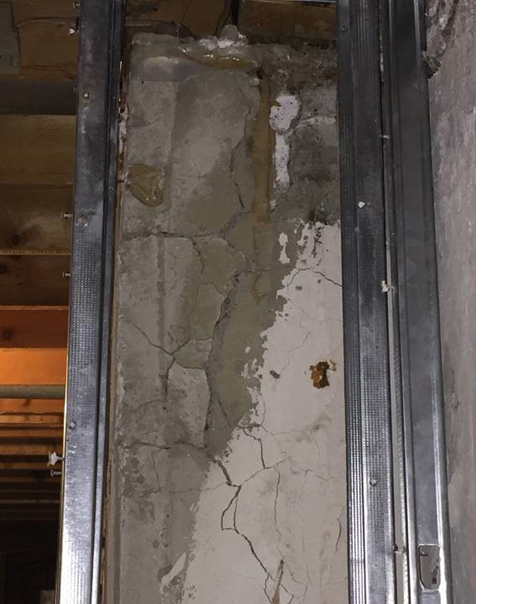
There is no simple fix for this mineral defect. It involves a heavy cost of raising the home up on hydraulic jacks and repouring and leveling the home on a new concrete foundation with a minimum cost of $150,000.
Michigan’s aggregates are primarily sourced from limestone, dolomite, sandstone, and glacial deposits, which do not contain pyrrhotite. Pyrrhotite is typically found in sulfide-rich metamorphic rocks, which is rare in the Lower Peninsula of Michigan. However, there is a pocket in the western Upper Peninsula that has tested positive for pyrrhotite at the Eagle Mine, in Marquette County. This mine predominately produces nickel and copper and not widespread aggregates for concrete production. Furthermore, Eagle Mine is looking into pyrrhotite production and how it could potentially be used in batteries with its magnetic properties.

Overall, there is no immediate concern or reason to believe that Michigan homes are at risk for damages due to pyrrhotite and pyrite. You can visually inspect your own concrete foundation and if you come across spider web cracks, bulging walls, uneven floors, doors and windows that stick, a rust color, or a white efflorescence powder feel free to send me a message to help further assist you with identifying potential issues and getting the correct testing if needed.


Excellent article! Proper drywall repair prevents future problems and keeps your walls looking clean and polished.
For anyone planning a renovation, understanding drywall repair is essential. This guide makes it clear and easy to follow.